
Leak Detection and Plumbing Repair in Dothan, AL
A visible drip may need a localized repair. A hidden pipe or water-line leak can first appear as increased water use, recurring moisture, a stain, a warm floor, lower pressure, or water sounds when fixtures are off.
Describe what you noticed, where it appears, and whether water is still escaping. These details help route the request toward fixture repair, concealed-pipe assessment, slab or service-line evaluation, or a related plumbing service.
When Should You Request Leak Detection?
Request leak detection when water appears without a clear source, the meter changes while fixtures are off, moisture keeps returning, pressure drops unexpectedly, or water can be heard behind a wall or beneath a floor. One exposed drip is more likely to need a localized repair. Moisture across several rooms, continuing meter movement, or water beneath a slab may require a wider assessment.
If water is actively escaping, close the nearest working shutoff—or the main valve if necessary and safe—then call to check availability. Stay away from sewage and standing water near electrical equipment. For uncontrolled or rapidly spreading water, review the emergency plumbing guidance.
Which Leak-Related Service Fits the Symptoms?
Use the visible symptom to choose a sensible next step. The actual source still needs to be assessed.
| What you notice | What it may indicate | Relevant next step |
|---|---|---|
| Dripping beneath one sink or at an exposed valve | Connection, seal, supply line, valve, or fixture problem | Accessible plumbing repair |
| A toilet runs between flushes or water enters the bowl | Flapper, fill valve, seal, supply connection, or tank component | Bathroom plumbing service |
| Cabinet moisture near a kitchen sink or appliance connection | Faucet, shutoff, supply line, drain connection, or compatible appliance line | Kitchen plumbing service |
| A ceiling stain or damp wall has no visible source | Concealed supply pipe, drain, fixture, roof, or HVAC-related moisture | Source-focused leak assessment |
| The meter changes while fixtures are off | Running fixture, service-line leak, or concealed customer-side water loss | Isolation and leak-detection assessment |
| A warm floor or recurring floor moisture appears without a visible leak | Possible hot-water line or slab-area leak | Slab and concealed-pipe evaluation |
| Moisture or dripping appears around a water heater | Tank, valve, fitting, drain, relief discharge, or connected piping issue | Water-heater assessment |
| Sewer odor, drain-area moisture, or wastewater appears | Trap, seal, drain connection, or sewer-line problem | Drain or sewer-line assessment |
| Water cannot be controlled or is spreading quickly | Active pipe or fixture failure | Urgent plumbing assessment |
This guide is not a diagnosis. Water can travel along framing, pipes, flooring, or other materials and appear away from its source.
How Leak Detection and Plumbing Repair Work
Leak detection narrows down the source and path of unwanted water. Leak repair corrects the confirmed pipe, fitting, valve, seal, fixture, or connection failure. A visible problem may move quickly from inspection to repair, while a concealed leak can require testing before the access point and repair scope are known.
How a Water Leak May Be Investigated
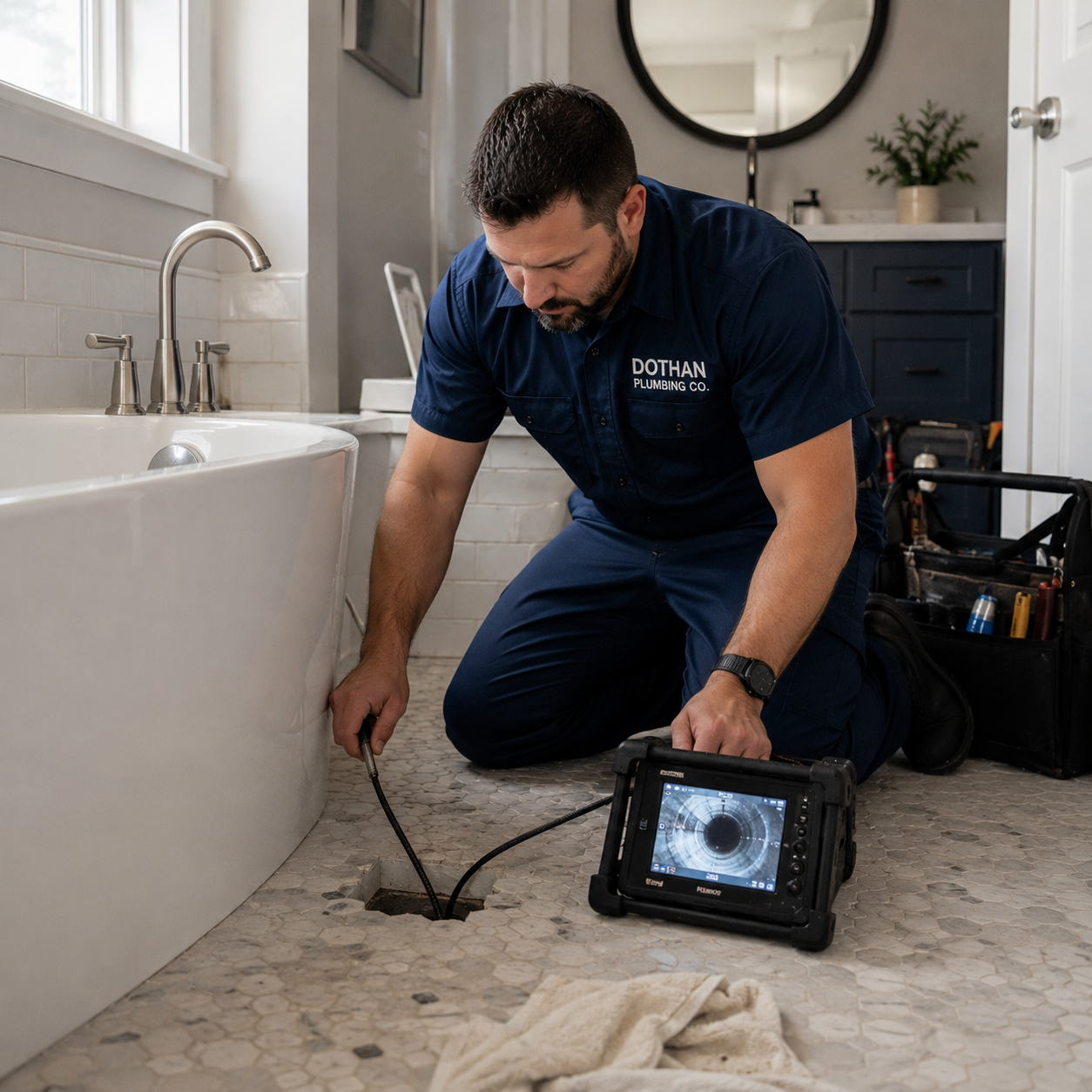
An assessment may include a review of water use and repair history, visual checks, fixture or zone isolation, and meter, flow, or pressure observations. When appropriate and available, the assessment may also use acoustic listening, thermal imaging, moisture meters, pressure testing, tracing equipment, or a drain camera.
No tool identifies every leak. Findings require context, and surfaces may still need to be opened for repair.

Accessible and Concealed Pipe Leaks
Water around an exposed pipe, fitting, valve, or fixture may come from a seal, loose connection, corrosion, or damaged component. An isolated accessible failure may suit focused repair; repeated failures may justify evaluating a longer section.
Slab and Underground Water Lines
Meter movement, a warm floor, recurring moisture, or sound below the floor are possible slab-leak signs—not proof. The source may need to be distinguished from a service line, drain, irrigation, or groundwater issue.
Water-Heater, Drain and Sewer Boundaries
Moisture near a water heater may come from several components. Never cap a safety discharge. Wastewater, sewer odor, gurgling, or several slow fixtures may point to a drain-side problem.
Is the Problem Localized or Part of a Wider Plumbing Issue?
| Pattern | A localized problem may be more likely when… | A wider assessment may be appropriate when… |
|---|---|---|
| Location | Moisture remains at one exposed fixture or connection | Water appears in several rooms or away from the likely fixture |
| Timing | The leak occurs only while one fixture is used | Water loss continues when fixtures are off |
| Pressure | One faucet or fixture behaves differently | Pressure changes affect several fixtures |
| Repair history | This is the first isolated failure | Similar pipes or fittings have failed repeatedly |
| Water meter | Usage stops after one fixture is isolated | The meter continues to change after reasonable fixture checks |
| Building area | The cause is visible and accessible | Water appears beneath a slab, underground, inside a wall, or above a ceiling |
A stain confirms moisture, not the precise pipe or component that failed. The source still needs to be assessed.
Plumbing Leak Repair or Pipe Replacement?
The appropriate scope depends on findings, access, pipe condition, repair history, compatibility, and applicable requirements—not simply the size of the visible stain.
| Condition | A focused repair may be practical | Replacement or rerouting may be considered |
|---|---|---|
| Damage | One fitting, valve, seal, or short pipe section has failed | Damage affects a longer run or several connected sections |
| Pipe condition | Surrounding material appears serviceable | Corrosion, deterioration, or recurring pinhole leaks affect the system |
| Repair history | The problem is isolated and has not returned | New failures have followed previous nearby repairs |
| Access | The damaged point can be reached with limited disruption | Repeated failures would require repeated wall, floor, or slab access |
| Compatibility | Suitable compatible repair materials are available | The existing material or layout makes a durable repair impractical |
Urgent Leaks and Safe First Steps
Treat a leak as urgent when water cannot be controlled, a pipe has burst, a ceiling is sagging, sewage is present, or water is spreading toward electrical equipment.
When safe, stop using the fixture and close its shutoff. Use the main valve only if water remains uncontrolled and you can operate it safely. Stay out of standing water near electricity.
Safe Checks Before Calling
- Note when the moisture, sound, pressure change, or increased use began.
- Observe whether the problem changes when a fixture or appliance operates.
- Photograph visible water or staining if it is safe.
- If normal use can remain off, observe the meter without touching utility equipment.
When DIY Should Stop
Stop when a shutoff will not operate, water returns, the source is concealed, a slab or underground line may be involved, sewage is present, or water is near electricity. Do not cut walls, break concrete, dismantle a water heater, open pressurized piping, or use drain chemicals for a suspected supply-pipe leak.
If you smell gas, leave and contact the gas utility or emergency services from a safe location.
What Affects Leak-Detection and Repair Costs?
There is no dependable universal price before the source and scope are known. Cost factors include:
- Whether the leak is visible or concealed
- The failed component and severity
- Diagnostic time and equipment used
- Access behind finishes, concrete, or landscaping
- Pipe material, condition, and compatible repair method
- Focused repair compared with rerouting or replacement
- Testing, urgency, permits, other trades, and restoration
Ask what the diagnostic charge covers, whether repair pricing is separate, what access and testing are expected, and which restoration is excluded.

Dothan Utilities, Permits and Credentials
The EPA’s WaterSense leak guidance explains how usage and meter checks can indicate water loss, although they do not locate the source.
How the Leak-Service Request Process Works
The process helps clarify the request and proposed scope. It does not promise a specific response time, method, price, or result.
Describe the Symptoms
Share the location, moisture, meter changes, affected rooms, timing, and whether the water is controlled.
Match the Request
Clarify whether it concerns an accessible repair, concealed supply leak, slab or service line, fixture, water heater, drain, or urgent condition.
Confirm Service Details
Ask about availability, charges, pricing arrangements, and limitations.
Review the Options
Discuss the evidence, access needs, and possible repair, replacement, or further testing.
Approve the Scope
Confirm materials, excluded restoration, required permits, any applicable warranty, and final testing.
What the Plumbing Scope May Include
Ask for a written description of included work, access, testing, and restoration before authorizing the job.
Plumbing Work May Include
- Symptom review and accessible plumbing assessment
- Relevant isolation, observations, or agreed diagnostic testing
- Approved repair of a confirmed pipe, fitting, valve, fixture, or supply line
- Testing within the agreed plumbing scope
Diagnostic methods and equipment depend on property conditions and the agreed scope.
Work That May Need Separate Approval
- Drywall, cabinetry, flooring, concrete, paint, tile, or landscaping
- Structural, foundation, mold, sanitation, or water-damage work
- Electrical or appliance-internal repair
- Utility-owned components and insurance decisions
- Roof, HVAC, irrigation, pool, or building-envelope leaks
Frequently Asked Questions About Leak Detection in Dothan
How can I tell whether a water leak is hidden?
Possible signs include unexplained meter movement, increased use, recurring dampness, stains, warm floors, lower pressure, or water sounds when fixtures are off. They do not identify the source by themselves.
Does a warm spot on the floor mean there is a slab leak?
Not necessarily. A hot-water line is one possibility, but sunlight, HVAC equipment, appliances, and flooring can also create temperature differences. Other leak evidence should be considered.
Can a leak be found without opening a wall or floor?
Tools can sometimes narrow the likely area and reduce exploratory access. No method guarantees that surfaces will remain closed; the source and repair determine access.
Is leak detection the same as repairing the leak?
No. Detection narrows the source; repair corrects the confirmed failure. Diagnosis, plumbing work, and restoration may be separately scoped.
Should I shut off the main water supply?
Use the nearest functional shutoff when safe. If water remains uncontrolled and you can safely operate the main valve, closing it may limit damage. Do not force a stuck valve or enter an unsafe area.
Who repairs the wall, flooring, or cabinet after plumbing access?
Restoration may be outside the plumbing scope. Ask whether cutting, drying, patching, cabinetry, flooring, concrete, or landscaping is included.
How do I verify the plumber handling the job?
Ask for any applicable credential information before authorizing work. Check the Alabama plumber and gas-fitter licensee search and confirm any City of Dothan requirements relevant to the proposed repair.
Describe the Leak Concern at Your Dothan Property
Call about a visible pipe leak, unexplained moisture, meter movement, slab-leak warning sign, damaged supply line, or another plumbing-repair concern. Describe the symptoms, whether the water is controlled, and where the problem appears.
Service requests are accepted for properties in Dothan, Alabama. Availability outside Dothan is confirmed individually when you contact us.