Kitchen Plumbing Services in Dothan, AL
Need a kitchen plumber in Dothan, AL? Call about leaking faucets, wet sink cabinets, slow drains, garbage disposals and appliance water-line connections before moisture or a backup affects nearby materials.
When Should You Call About a Kitchen Plumbing Problem?
Call when a faucet keeps dripping, water appears beneath the sink, a connector leaks, the sink drains slowly, a disposal will not run or an appliance water line shows moisture. When and where the symptom appears helps separate fixture, drain, appliance and wider plumbing problems.
If water is actively spreading, stop using the sink or connected appliance. Close an accessible fixture or appliance shutoff only when it can be reached and operated safely. Keep away from standing water near outlets, disposal wiring or appliance power connections.
- Kitchen faucet repair and compatible replacement
- Sink, strainer, tailpiece and P-trap connections
- Shutoff valves, connectors and exposed piping
- Localized pressure and hot-water symptoms

Kitchen Plumbing Problems and Connections Covered
The kitchen combines water supply, drainage, fixtures and appliance connections in a compact area. The correct service depends on the affected component and when the symptom occurs.
Faucets and Sinks
Dripping spouts, handle or base leaks, poor local flow, basket strainers, drain flanges and replacement connections.
Under-Sink Plumbing
Accessible shutoff valves, braided connectors, exposed supply tubing, tailpieces, traps and drain joints.
Kitchen Drains
Slow or clogged sinks, double-bowl backups, disposal-related restrictions and dishwasher discharge symptoms.
Garbage Disposals
Units that jam, hum, leak, drain poorly, trip repeatedly or may require compatible replacement.
Appliance Connections
Dishwasher supply and drain hoses plus refrigerator and ice-maker water-line connections.
Filters and Installation
Compatible filtration or reverse-osmosis connections and plumbing for planned fixture replacements or remodels.
Match the Kitchen Symptom to the Likely Service
These observations can identify a sensible next step, but they are not a guaranteed diagnosis.
| What you notice | What it may indicate | Relevant next step |
|---|---|---|
| Faucet drips from the spout | Cartridge, stem, seal or valve-seat problem | Faucet repair or replacement assessment |
| Water appears around the faucet base | Faucet seal, spray hose, mounting area or supply connection | Locate the source before choosing a repair |
| Water collects inside the sink cabinet | Shutoff, connector, faucet, strainer, disposal, P-trap or drain leak | Stop using the affected fixture and inspect beneath the sink |
| Sink drains slowly | Local residue, trap buildup, disposal restriction or branch-drain problem | Sink and drain assessment |
| Both sink bowls back up | Shared drain, disposal or branch-line restriction | Kitchen drainage assessment |
| Sink rises when the dishwasher drains | Dishwasher hose, disposal inlet or shared-drain restriction | Dishwasher and sink-drain assessment |
| Disposal hums but does not turn | Jam, seized mechanism or motor problem | Disconnect power and request disposal assessment |
| Dishwasher supply line leaks | Connector, shutoff, tubing or appliance inlet problem | Stop the appliance and assess the connection |
| Kitchen faucet alone has low pressure | Aerator, spray head, cartridge, hose or local shutoff restriction | Local faucet assessment |
| Several fixtures have low pressure | Supply, pressure-regulator or wider plumbing issue | Broader plumbing assessment |
| Hot water is poor at several fixtures | Water-heater or hot-water distribution problem | Water-heater assessment |
Kitchen Sink, Faucet and Under-Sink Plumbing
Dripping Faucets, Handle Leaks and Poor Flow
A faucet that drips after shutoff may have a worn cartridge, stem, seal or valve-seat problem. Water around the handle or base may come from an internal seal, pull-out hose, loose connection or mounting area. Low flow at only this faucet may involve the aerator, spray head, hose, cartridge or local shutoff.
Repair may be practical when the faucet body is sound and compatible parts are available. Replacement may make more sense with extensive corrosion, unavailable parts, recurring leaks or a changed sink configuration.
When choosing a faucet, check the mounting-hole pattern, deck thickness, cabinet space, connection type, hose clearance and rated flow. Kitchen faucets do not currently earn the WaterSense label; review the EPA’s official product guidance.
Sink, Strainer, Shutoff and Drain Connections
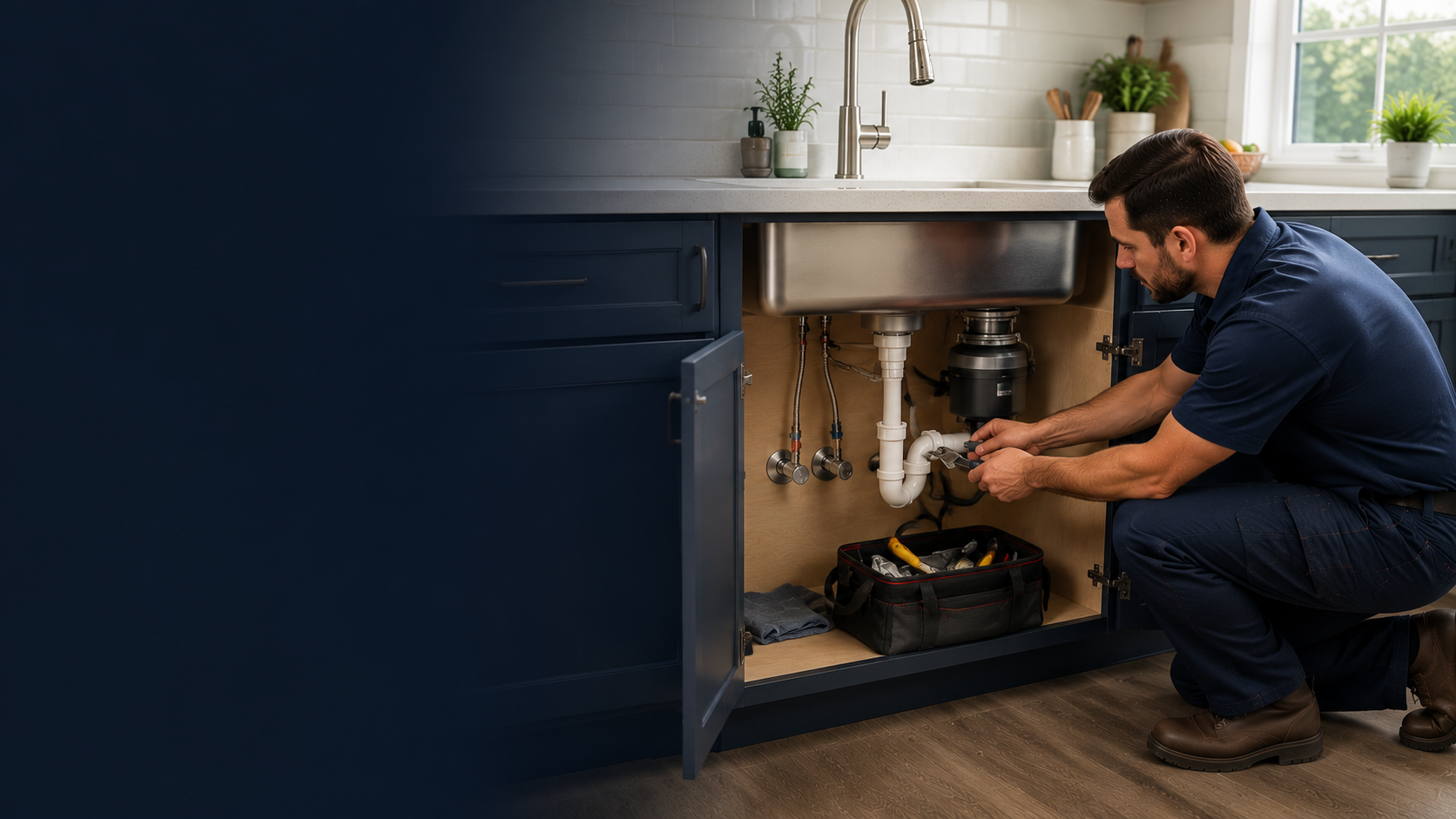
Water beneath a sink may come from the strainer, drain flange, tailpiece or disposal mount. A leak that appears only while the basin empties points toward the drain side. Water that appears with the drain plugged may involve the faucet, supply lines or sink rim.
Other common leak points include shutoff valves, braided connectors, faucet or filter tubing, disposal connections and P-trap joints. Note whether the water appears during faucet use, basin drainage, a dishwasher cycle or while every fixture is off.
Do not force a stuck or corroded shutoff valve. Remove stored items when safe, keep electrical devices away and stop using the affected fixture until the source is controlled.
Clogged Kitchen Sinks and Garbage Disposal Problems
A slow sink may have debris near the strainer, buildup in the trap, a disposal restriction or residue farther into the branch drain. If both bowls back up or dishwasher discharge raises water in the sink, the restriction may be beyond the visible connection.
One recent, localized sink symptom can begin with a kitchen plumbing assessment. Repeated clogs, gurgling, backups at multiple fixtures or water moving between fixtures belong on the dedicated drain cleaning and clogged-drain page.
A disposal may leak from the sink flange, mount, dishwasher inlet, body or drain connection. Humming, repeated tripping, unusual noise and failure to start may involve a jam, motor, internal unit or electrical issue.
Safe first step: Do not place a hand or tool into a disposal while it is connected to power. Do not mix chemical drain products. If a cleaner has already been used, identify it when requesting help.

Dishwasher, Refrigerator and Filtration Water Lines
Dishwasher supply and drainage
A dishwasher depends on a water-supply connection, accessible shutoff and drain hose. Water beneath the appliance may come from these connections, the sink or disposal inlet, or an internal appliance component. Plumbing work can address accessible supply and drain connections; internal controls, pumps and appliance repairs may require appliance-specific service.
If the sink fills while the dishwasher drains, stop the cycle and avoid using the sink until the shared drain path is assessed. If the appliance continues filling while off, close its accessible shutoff when safe.
Refrigerator, ice-maker and filter connections
Refrigerator and ice-maker lines can leak at the shutoff, tubing, connector or appliance inlet. Water may remain hidden behind the appliance or travel along the flooring. Avoid moving a heavy refrigerator across a wet floor unless it can be done safely.
Filtration and reverse-osmosis systems may use feed-water adapters, dedicated faucets, tanks and drain connections. Internal appliance or treatment-system components may require manufacturer-specific service.

Reduce Grease-Related Kitchen Drain Problems
The City of Dothan explains that residential fats, oils and grease can accumulate in plumbing and the sewer system, restrict flow and contribute to backups. Review the City’s official residential FOG guidance for prevention and disposal information.
Kitchen Fixture Installation and Remodel Connections
A direct replacement usually keeps the existing location, rough-in and connection layout. A larger installation may change sink dimensions, faucet mounting, appliances, filtration or drain alignment.
Before Purchasing
Confirm measurements, mounting requirements, connection sizes, countertop compatibility and available cabinet clearance.
Possible Plumbing Scope
Sink mounting and sealing, faucet supplies, accessible drain adaptation and compatible appliance connections.
Possible Additional Trades
Countertop cutting, cabinetry, structural support, electrical work and internal appliance installation may require other trades.
For a remodel, new rough-in or significant connection change, review the City of Dothan’s official plumbing permit requirements before work begins.
Is the Problem Local to the Kitchen or Part of a Wider System?
Local Faucet Symptom
If only the kitchen faucet has low flow, the aerator, spray head, hose, cartridge or local valve is more likely.
Local Drain Symptom
If the kitchen sink alone drains slowly, the strainer, trap, disposal or kitchen branch drain may be involved.
Multiple Slow Fixtures
Several slow drains, gurgling or backups indicate a wider drainage problem. Review drain cleaning service.
Unexplained Moisture
When the fixture source is unclear, request plumbing repair and leak detection.
Wider Hot-Water Issue
Poor hot water in the kitchen and other rooms may require water-heater assessment.
Uncontrolled Water or Sewage
For uncontrolled flow, sewage backup or water near electricity, review emergency plumbing guidance.
Kitchen Plumbing Repair or Replacement?
The practical choice depends on condition, access, compatible parts, repair history and surrounding water, drain and electrical connections.
| Condition | Repair may be appropriate | Replacement may be more practical |
|---|---|---|
| Local component | One accessible cartridge, seal, connector, valve or drain joint has failed | Several components are failing or the unit body leaks |
| Fixture condition | Faucet, sink, disposal or connection remains intact | The fixture is cracked, severely corroded, incompatible or damaged |
| Problem history | First occurrence with a clear local cause | Leaks, jams, clogs or control problems keep returning |
| Parts and compatibility | Correct service parts and connections are available | Parts are unavailable or the new configuration requires adaptation |
| Project scope | Existing sink, cabinet and rough-in remain unchanged | Countertop, cabinet, electrical or rough-in changes are required |
Safe Steps for an Active Kitchen Plumbing Problem
Control the Immediate Risk
- Stop using a sink or appliance that is overflowing or releasing water.
- Close the accessible local shutoff only if it turns normally and can be reached safely.
- Turn off a disposal or appliance if there is unusual noise, burning odor, repeated tripping or water near power.
- Keep people and pets away from sewage or standing water near outlets and appliances.
Record Useful Details
- Remove stored items from the cabinet when this can be done safely.
- Note whether water appears during supply flow, basin drainage or an appliance cycle.
- Check whether other fixtures have similar drainage, pressure or hot-water symptoms.
- Do not mix drain cleaners, force corroded valves or dismantle concealed or energized parts.
What Happens After You Request Kitchen Plumbing Help?
The exact scope depends on access, fixture condition, compatible parts and what is found during assessment.
Describe the Symptom
Identify the fixture or appliance and explain whether the issue appears during supply flow, drainage, disposal use or an appliance cycle.
Check Connections
The relevant supply, shutoff, fixture, drain and appliance connections can be assessed.
Review the Next Step
This may involve adjustment, component repair, reconnection, drain service or fixture replacement.
Check Operation
Relevant connections, drainage, flow and fixture operation should be checked after the work.
Kitchen Plumbing Cost and Project Boundaries
Cost depends on the affected component, access, parts, number of connections, repair-versus-replacement decision and whether drain, appliance, electrical, countertop or cabinet work is also required. A loose visible connection differs in scope from a concealed leak or layout change.
Before approving work, ask what caused the symptom, what is included, which parts may change, whether concealed damage could be found and whether another trade or permit may be required.
Plumbing scope may include fixtures, shutoffs, connectors, traps, disposal plumbing, appliance connections, filter plumbing and testing. Countertop fabrication, cabinetry, flooring, drywall, remediation, electrical circuits and internal appliance repair may fall outside that scope.
Related Plumbing Services
Frequently Asked Questions About Kitchen Plumbing
Who should I call for a clogged kitchen sink or drain in Dothan?
A plumber can assess whether the restriction is near the sink, disposal or branch drain. When the clog returns, both bowls back up, the dishwasher sends water into the sink or several fixtures are affected, request drain cleaning and clogged-drain service. Do not mix chemical drain products.
Why is water leaking beneath my kitchen sink?
Possible sources include a faucet or spray hose, shutoff valve, supply connector, sink strainer, disposal mounting assembly, dishwasher connection, filter tubing, tailpiece or P-trap. Note whether the leak appears while water runs, while the basin drains or during an appliance cycle.
Should I repair or replace a leaking kitchen faucet?
Repair may be appropriate when the faucet body is sound and the correct cartridge, seal or hose is available. Replacement may be more practical when corrosion is extensive, parts are unavailable, leaks recur or a different mounting configuration is needed.
Why does my garbage disposal hum but not turn?
The disposal may be jammed, seized or experiencing a motor or electrical problem. Turn it off and disconnect power at the appropriate safe control. Do not place a hand or tool into the unit while it is connected to power.
Why does water back up into the sink when the dishwasher drains?
The dishwasher drain hose, disposal inlet or shared kitchen drain may be restricted or incorrectly connected. Stop the dishwasher if the sink is filling and avoid using the sink until the drainage path is assessed.
Can a plumber connect a reverse-osmosis system in Dothan?
Plumbing work may cover an accessible shutoff, compatible feed-water tubing, a dedicated faucet and certain drain connections. Cabinet space, countertop drilling, manufacturer requirements and existing valve condition affect the scope. Internal filter, pump or treatment-system components may require manufacturer-specific service.
When is a kitchen plumbing problem urgent?
Treat it as urgent when water will not stop, sewage enters the sink, a supply line releases water rapidly, cabinets or flooring are flooding, or water is close to disposal wiring, outlets or appliances. Stop using the fixture, shut off water or power when safe and review emergency plumbing guidance.
Request Kitchen Plumbing Help in Dothan
Describe the affected fixture or appliance connection, when the symptom occurs and whether other fixtures have the same problem. This helps distinguish a local component from a wider drain, leak, supply or hot-water issue.